Do You Need Genetic Testing With Donor Eggs? What Patients Should Know
•
SCRC Editorial Team
•
6 min read
If you’re using donor eggs to build your family, there’s a good chance someone has already mentioned genetic testing. Maybe your coordinator brought it up. Maybe you read about it online. Maybe another patient in a forum swore by it.
Here’s the honest answer: genetic testing is not automatically necessary when you’re using donor eggs. Whether it makes sense for your specific cycle depends on a set of factors that have nothing to do with the fact that you’re using a donor.
The short version: The most common form of embryo genetic testing, called PGT-A, is not routinely recommended for donor egg cycles by major medical bodies, including the American Society for Reproductive Medicine (ASRM). But other types of genetic testing may absolutely be appropriate, depending on your history and your donor’s. Understanding the difference matters, both for your decision-making and your peace of mind.
At SCRC, we’ve been guiding patients through donor egg IVF for over 25 years. We don’t recommend testing for the sake of testing. We recommend it when the evidence says it adds real value to your outcome.
What Is Preimplantation Genetic Testing (PGT)?
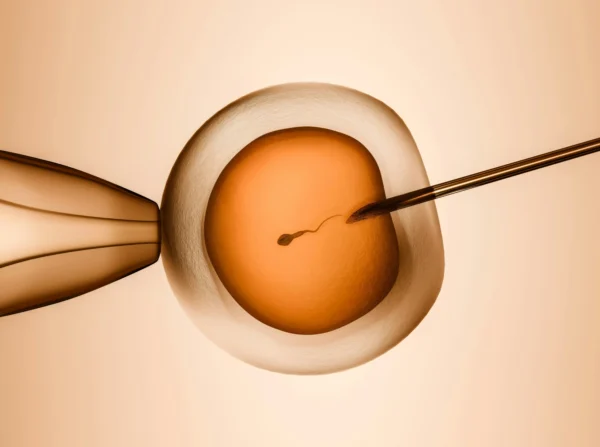
Preimplantation genetic testing (PGT) is a procedure performed on embryos created through IVF before they are transferred to the uterus. A small number of cells are biopsied from each embryo at the blastocyst stage (typically day 5 or 6), then sent to a specialized genetics lab for analysis.
There are three distinct types of PGT, and they are not interchangeable:
| Type | What It Tests | When It’s Used |
|---|---|---|
| PGT-A | Chromosome number (aneuploidy) | Advanced maternal age, recurrent miscarriage, repeated IVF failure |
| PGT-M | Single-gene inherited disorders | Known genetic condition in patient, partner, or donor (e.g., cystic fibrosis, sickle cell) |
| PGT-SR | Structural chromosome rearrangements | When a patient or partner has a known chromosomal translocation or inversion |
Most of the debate around genetic testing in donor egg cycles centers on PGT-A. PGT-M and PGT-SR are different conversations entirely, and we’ll cover those separately below.
One important note: because PGT requires embryo biopsy, all embryos must be frozen while results are processed. This means your transfer will be a frozen embryo transfer (FET) rather than a fresh transfer, which is worth factoring into your timeline and expectations.
Why PGT-A Is Not Routinely Recommended for Donor Egg Cycles
This is where a lot of patients are surprised. PGT-A is the most widely used form of embryo genetic testing in the U.S., and its use in IVF cycles overall has grown substantially, from 14% of cycles in 2014 to 44% by 2019 according to national SART data. But that growth has not translated into a clear recommendation for donor egg cycles specifically.
Here’s why.
The core logic behind PGT-A doesn’t apply the same way to donor eggs
PGT-A screens embryos for aneuploidy, meaning an incorrect number of chromosomes. The primary driver of aneuploidy in embryos is egg age. As eggs age, chromosomal errors become more common. This is why PGT-A is most valuable for patients using their own eggs at 35 or older, or for those with a history of recurrent miscarriage or failed transfers.
Egg donors, by contrast, are typically young and healthy. They go through rigorous screening that includes genetic history, karyotype analysis, and carrier screening. The chromosomal error rate in embryos from young donor eggs is substantially lower than in embryos from older patients’ own eggs.
Key finding: A 2025 study published in Human Reproduction analyzing 2,233 donor oocyte cycles found that PGT-A did not improve live birth rates or reduce miscarriage rates compared to untested cycles. The live birth rate in the PGT-A group was 39.9% versus 42.9% in the non-PGT-A group, with no statistically significant difference. (Source: Oxford Academic, 2025)
The ASRM’s 2024 committee opinion on PGT-A is direct on this point: “The totality of evidence argues against the routine use of PGT-A in donor egg cycles.”
The tradeoffs are real
Beyond the lack of clear benefit, there are practical downsides to consider:
- Embryo biopsy carries a small risk of damage to the embryo
- Mandatory freezing delays your transfer and adds a cycle
- Mosaic results (embryos with a mix of normal and abnormal cells) can be difficult to interpret and may lead to discarding embryos that could have resulted in a healthy pregnancy
- Added cost without demonstrated improvement in outcomes for most donor egg patients
None of this means PGT-A is never appropriate. It means it shouldn’t be a default.
When Genetic Testing With Donor Eggs Does Make Sense
The nuance matters here. “Not routinely recommended” is not the same as “never appropriate.” There are specific clinical situations where genetic testing adds real value to a donor egg cycle.
PGT-A may be worth discussing if:
- The sperm source has significant male factor infertility (severe oligospermia or teratozoospermia), since sperm quality can contribute to chromosomal errors in embryos
- You have experienced unexplained implantation failures after multiple donor egg transfers
- You have a history of recurrent pregnancy loss without a known cause, even when using donor eggs
- Your donor is older (some programs use donors up to their early 30s, and age-related chromosomal risk, while still lower than with older patients’ own eggs, becomes more relevant)
- You need to transfer a single embryo and want the highest confidence in which embryo to select
PGT-M is appropriate when:
PGT-M tests for specific single-gene disorders and operates on an entirely different clinical logic than PGT-A. It is appropriate when:
- You or your partner are carriers of a known genetic condition (such as cystic fibrosis, sickle cell disease, Fragile X syndrome, or Huntington’s disease) that could be passed to a child through the sperm
- Your egg donor carries a known mutation that could combine with a sperm-side mutation to create an affected embryo
- There is a known hereditary condition in your family that warrants embryo-level screening
PGT-M can detect more than 99% of inherited single-gene disorders with greater than 98% accuracy, according to published literature from NIH-indexed research. When there is a clear indication, it is one of the most powerful tools available in reproductive medicine.
PGT-SR is appropriate when:
PGT-SR screens for structural chromosome rearrangements, such as translocations or inversions. It is indicated when you, your partner, or in rare cases the sperm donor, carries a chromosomal rearrangement that increases the risk of miscarriage or chromosomal abnormalities in offspring.
This is a less common scenario but an important one. If a karyotype test has revealed a structural rearrangement in either partner, this is a conversation worth having with your physician before your cycle begins.
What Donor Screening Already Covers
One reason PGT-A adds limited value in donor egg cycles is that reputable egg donors are already screened extensively before their eggs are ever used. At SCRC, our donor egg program includes a rigorous vetting process that covers far more than basic health history.
Standard donor screening typically includes:
- Karyotype analysis to identify chromosomal abnormalities
- Expanded carrier screening for hundreds of genetic conditions, including cystic fibrosis, spinal muscular atrophy, fragile X syndrome, and more
- Infectious disease testing (FDA-required)
- Psychological evaluation
- Medical history review, including family history of hereditary conditions
- Age restrictions to minimize chromosomal risk at the egg level
This pre-screening is specifically designed to reduce the likelihood that a donor’s eggs carry significant genetic risk. It’s part of why donor egg IVF tends to have favorable success rates even without routine PGT-A.
What donor screening does not cover: It cannot predict chromosomal errors that occur during fertilization and early cell division, which is where aneuploidy typically originates. This is the biological argument some make in favor of PGT-A even in donor cycles. However, as the research shows, the rate of these errors is low enough in young donor eggs that routine testing has not demonstrated a meaningful improvement in outcomes.
How SCRC Approaches Genetic Testing Decisions
We take a personalized approach to every cycle, which means genetic testing recommendations are never one-size-fits-all. When a patient asks whether they need PGT with donor eggs, our answer always starts with their full clinical picture.
As part of the Nucleus IVF+ network, SCRC has access to advanced genetic analysis capabilities that go beyond standard PGT. This means that when testing is indicated, we can offer it with a level of precision and laboratory infrastructure that supports confident clinical decisions.
The questions we consider before recommending any form of genetic testing include:
- What is the sperm source, and is there any male factor infertility present?
- Does either partner carry a known genetic mutation or chromosomal rearrangement?
- Is there a family history of hereditary genetic conditions?
- Has the patient experienced prior implantation failures or pregnancy losses?
- What does the expanded carrier screening on the donor show, and does it create any compatibility concerns with the sperm source?
For patients who want to learn more about how genetic testing fits into the broader IVF process, our article on genetic testing on embryos and IVF transfer covers the technical process in depth. And for patients with a history of recurrent miscarriage, our resource on what testing can help after recurring pregnancy loss is a useful starting point.
The Bottom Line
Genetic testing is a powerful tool. But like any tool in medicine, its value depends entirely on whether it’s the right instrument for the job.
For most patients using donor eggs from young, screened donors, PGT-A does not improve success rates or reduce the risk of miscarriage. The current evidence, including ASRM’s 2024 committee opinion and multiple large-scale studies, consistently supports this conclusion. Routine testing in this context adds cost, delays your transfer, and introduces interpretive complexity without a demonstrated benefit.
That said, PGT-M and PGT-SR serve entirely different purposes and can be critically important when there is a known genetic condition or chromosomal rearrangement in the picture. These decisions are not about the donor’s eggs; they are about the genetic contributions from both sides of the equation.
The question to ask your doctor isn’t “should I do genetic testing?” It’s “given my specific history and my donor’s screening results, what does the evidence say about whether testing will improve my outcome?”
If you’re planning a donor egg cycle and want to understand whether any form of genetic testing is right for your situation, we’re here to walk through it with you. Schedule a consultation with SCRC and let’s build a plan based on your clinical picture, not assumptions.
Disclaimer: This article is for informational purposes only and does not constitute medical advice. Consult a board-certified Reproductive Endocrinologist for personalized guidance about your treatment.