How Does PMOS Affect My Fertility and What Are My Treatment Options?
How polycystic ovary syndrome interferes with ovulation, how it is diagnosed, and how fertility treatment is tailored for PMOS patients.
•
Medically reviewed by Dr. Carolyn Alexander
•
6 min read
THE SHORT ANSWER
PMOS (formerly referred to as PCOS) affects fertility mainly by disrupting ovulation. When the ovaries do not release an egg regularly, there are fewer chances to conceive each year. Most people with PMOS can still become pregnant, and many need only medication to ovulate. Treatment usually begins with lifestyle support and oral medication such as letrozole, then moves to injectable medication, IUI, or IVF only if earlier steps do not lead to pregnancy.
Polyendocrine metabolic ovarian syndrome, or PMOS, is one of the most frequent reasons patients come to a fertility center with irregular cycles. Research generally suggests it affects roughly 6 to 13 percent of women of reproductive age, and many are not diagnosed until they start trying to conceive.
The newer name reflects what physicians have understood for years. PMOS involves hormones and metabolism throughout the body, not only the ovaries. This guide uses PMOS because it is still the term most patients search for.
Below, we walk through how PMOS affects fertility, how it is diagnosed, what treatment options look like at each stage, and how IVF is adjusted for PMOS patients.
UNDERSTANDING PMOS
How PMOS Affects Fertility
In a typical cycle, the brain releases two hormones, FSH and LH, that prompt one follicle in the ovary to mature and release an egg. In PMOS, that signaling is often out of balance, and follicles begin to develop but stall before ovulation. Several factors tend to contribute.
- Irregular or absent ovulation, which leads to unpredictable periods and fewer opportunities to conceive.
- An imbalance between LH and FSH, with LH often running higher than expected.
- Higher levels of androgens, such as testosterone, which can interfere with follicle development.
- Insulin resistance, which is common in PMOS and can push the ovaries to produce more androgens.
Not every patient experiences all of these. Some have regular-looking cycles with occasional missed ovulation, while others go months without a period. Signs outside the reproductive system can include acne, excess facial or body hair, thinning scalp hair, and difficulty managing weight.
THE DIAGNOSIS
How PMOS Is Diagnosed
PMOS is diagnosed using the Rotterdam criteria. A patient needs at least two of the following three findings.
- Irregular or absent ovulation, usually shown by irregular periods.
- Signs of elevated androgens, either in blood work or through symptoms like acne and excess hair growth.
- Polycystic-appearing ovaries on ultrasound, meaning many small follicles, or in adults, an elevated AMH level.
Your physician will also rule out conditions that can look similar, including thyroid disorders, elevated prolactin, and nonclassic congenital adrenal hyperplasia. A full fertility workup typically adds a pelvic ultrasound, a check of the uterus and fallopian tubes, and a semen analysis for your partner or a review of donor sperm, since fertility involves more than ovulation alone.
TREATMENT OPTIONS
Fertility Treatment Options for PMOS
PMOS treatment generally follows a step-by-step approach, starting with the least invasive option that fits your situation. Your age, how long you have been trying, and any other fertility factors can change where you begin.
1
Lifestyle support and metformin
For patients with insulin resistance or a higher body weight, changes to nutrition, activity, and sleep can improve how the body responds to insulin. Even modest weight loss restores ovulation for some patients. Metformin, a medication that improves insulin sensitivity, may be added when there are signs of insulin resistance.
2
Ovulation induction with letrozole or Clomid
Letrozole is now the first-line medication for most PMOS patients trying to conceive, since studies have found higher live birth rates compared with clomiphene (Clomid). Both are taken as pills for five days early in the cycle, and ultrasound monitoring helps time intercourse or insemination around ovulation.
3
Injectable medications
When oral medication does not lead to ovulation, injectable FSH (gonadotropins) can stimulate the ovaries more directly. Ovaries affected by PMOS can be very sensitive to these medications, so close monitoring is needed to lower the chance of multiple pregnancy.
4
Intrauterine insemination (IUI)
IUI places washed sperm directly into the uterus around ovulation. For PMOS patients, it is usually paired with letrozole or injectables and can help when medication alone has not resulted in pregnancy or when a mild sperm factor is present.
5
In vitro fertilization (IVF)
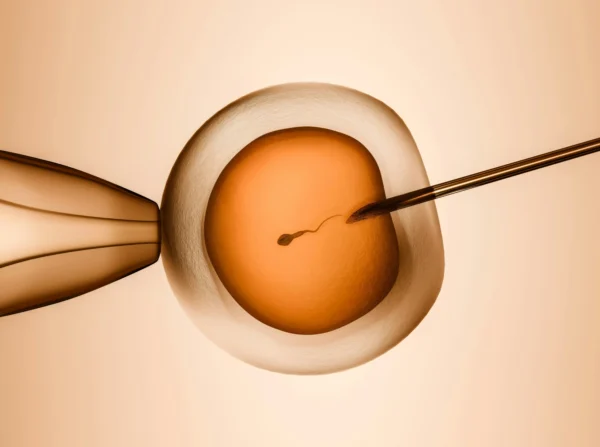
IVF stimulates the ovaries to mature several eggs, which are retrieved and fertilized in the lab. An embryo is then transferred to the uterus. IVF offers the highest chance of pregnancy per cycle and allows a single embryo to be transferred, which lowers the chance of twins.
SIDE BY SIDE
Comparing PMOS Fertility Treatments
| Treatment | How it works | Who it may suit | Risks to discuss |
|---|---|---|---|
| Lifestyle support and metformin | Improves insulin sensitivity, which can help restore ovulation | Patients with insulin resistance or a higher body weight | Stomach upset with metformin; results take time |
| Letrozole or Clomid | Oral medication that prompts a follicle to mature and ovulate | Most PMOS patients as a first step | Small increase in the chance of twins |
| Injectable gonadotropins | Stimulates the ovaries directly with FSH | Patients who do not ovulate on oral medication | Higher chance of multiples and OHSS without close monitoring |
| IUI | Places sperm in the uterus at ovulation, usually with medication | Patients who ovulate with medication but have not conceived | Depends on the medication paired with it |
| IVF | Eggs are retrieved, fertilized in the lab, and an embryo is transferred | Patients who have not conceived with earlier steps or have other fertility factors | OHSS risk, managed with tailored protocols |
IVF AND PMOS
How IVF Is Tailored for PMOS Patients
Because ovaries affected by PMOS often contain many follicles, they can respond strongly to stimulation medication. That raises the risk of ovarian hyperstimulation syndrome (OHSS), which can cause bloating and abdominal discomfort and, in rare cases, more serious complications.
Fertility specialists who treat PMOS regularly adjust IVF protocols to account for this. Common approaches include lower medication doses, an antagonist protocol, triggering final egg maturation with a GnRH agonist instead of hCG, and freezing all embryos so transfer happens in a later cycle once hormone levels settle. Together, these steps greatly reduce OHSS risk.
PMOS patients often produce more eggs than average during IVF, which can mean more embryos to work with. Embryos can be grown to the blastocyst stage, day 5 or 6, before transfer, and extra embryos can be frozen for future attempts.
QUESTIONS TO ASK YOUR FERTILITY SPECIALIST ABOUT PMOS
- How many PMOS patients do you treat, and how does your approach differ for them?
- What testing will you run before recommending a treatment plan?
- Do you start with letrozole, and how many cycles do you try before moving on?
- How do you monitor cycles to lower the chance of multiples?
- If I need IVF, what steps do you take to reduce my risk of OHSS?
- Is nutrition or metabolic support part of your PMOS care?
WHAT TO EXPECT
Signs a Treatment Plan Is Built Around PMOS
- A full workup that confirms the diagnosis and rules out look-alike conditions.
- Attention to insulin resistance and metabolic health alongside fertility treatment.
- Ultrasound monitoring during medicated cycles.
- IVF protocols adjusted to lower OHSS risk.
- A clear plan for when to move to the next step if a treatment is not working.
Signs It May Be Time to Ask More Questions
- Several medicated cycles with no monitoring.
- Repeating the same treatment many times without a change in plan.
- A standard IVF protocol with no discussion of OHSS.
- No evaluation of your partner or donor sperm.
- Little explanation of why a specific treatment was chosen.
COMMON QUESTIONS
Frequently Asked Questions
Yes. Many people with PMOS conceive without treatment. Because ovulation may be irregular, it can take longer, and timing is harder when cycles are unpredictable. If you are under 35 and have been trying for a year, or 35 or older and trying for six months, an evaluation is a reasonable next step. With very irregular periods, it makes sense to come in sooner.
No. Most patients start with lifestyle support or oral medications such as letrozole that help the ovaries release an egg. IVF is typically considered when ovulation medication has not led to pregnancy, or when other factors are involved, such as blocked fallopian tubes, a sperm factor, or age.
People with PMOS often produce more eggs than average, especially during IVF. Research on whether PMOS lowers egg quality is mixed. For most patients, age remains the strongest factor in egg quality, with or without PMOS.
It depends on your plan. California’s SB 729 requires many large group health plans to cover infertility diagnosis and treatment, including IVF, beginning in 2026. Small group and individual plans may not be required to offer the same coverage. Our team can review your benefits with you before treatment begins.
Yes. Symptoms can shift with age, weight changes, and hormonal changes. Some patients find their cycles become more regular over time, while others notice metabolic concerns becoming more prominent. Ongoing care with a physician who understands PMOS helps track those changes.
They describe the same condition. PMOS, or polyendocrine metabolic ovarian syndrome, is a newer name intended to reflect the hormonal and metabolic effects of the condition throughout the body. Diagnosis and treatment are the same regardless of which name is used.
WHY PATIENTS CHOOSE SCRC FOR PMOS FERTILITY CARE
- Care that includes Dr. Carolyn Alexander, whose clinical focus includes PMOS.
- Board-certified reproductive endocrinologists who build plans around each patient’s history.
- IVF performed in our Beverly Hills ART laboratory.
- SART member clinic.
- Locations across Southern California.