What Should I Look for in a Fertility Clinic’s Embryology Lab?
Once you’ve started an IVF or egg-freezing cycle, the embryology lab — not the physician — is where most of the work that determines your outcome actually happens.
•
SCRC Editorial Team
•
8 min read
When patients compare fertility clinics, almost everyone starts with the same things: the doctor’s reputation, the clinic’s location, the price. Very few people ask about the lab. That’s a mistake. Once you’ve started an IVF or egg-freezing cycle, the embryology lab — not the physician — is where most of the work that determines your outcome actually happens.
Eggs are fertilized in the lab. Embryos are grown in the lab. Eggs and embryos are frozen, thawed, biopsied, and graded in the lab. A skilled physician with a mediocre lab will get mediocre results. A great lab can recover from almost any other clinic shortcoming. Here’s what separates a top-tier embryology lab from an average one, and the questions that will let you tell the difference.
THE SHORT ANSWER
A high-quality embryology lab has four things: accreditation by the College of American Pathologists (CAP) or The Joint Commission; transparent key performance indicators (fertilization rate, blastocyst conversion rate, post-thaw survival, implantation rate); enough cycle volume that embryologists perform ICSI, biopsy, and vitrification every day; and modern technology infrastructure — time-lapse incubators, electronic witnessing, real-time alarm monitoring, and redundant cryo-storage systems. Everything else is downstream of those four.
WHY IT MATTERS
Why the lab matters more than patients realize
In a typical IVF cycle, the physician sees you maybe four to six times: consultation, baseline, monitoring scans, retrieval, transfer. The lab handles your eggs and embryos every single day in between. From the moment your eggs leave your body, embryologists are performing high-skill work that directly determines whether you have an embryo to transfer.
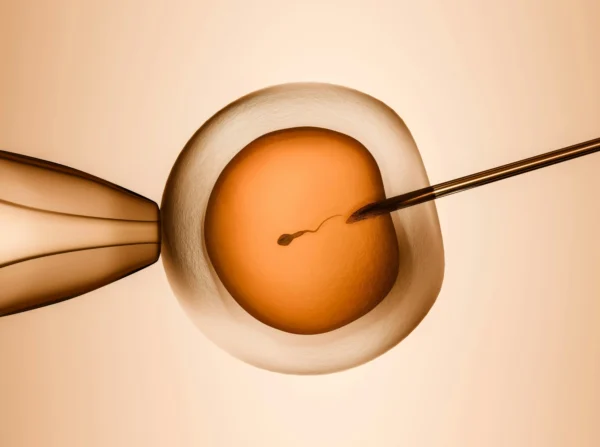
That work includes identifying mature eggs after retrieval, performing ICSI (injecting a single sperm into each mature egg under a microscope), maintaining embryos in a temperature-, pH-, and oxygen-controlled environment for 5–7 days, grading embryos and choosing which ones to transfer or freeze, performing trophectoderm biopsy for genetic testing, and vitrifying or thawing eggs and embryos with exacting precision.
Each step is manual. Each requires calibrated equipment and a quality system that catches mistakes before they reach you. The difference between a 50% fertilization rate and a 75% fertilization rate is almost entirely the lab — same eggs, same sperm, different result. That difference is the difference between four embryos and six, between one transfer attempt and three.
EVALUATION CRITERIA
Seven criteria for evaluating an embryology lab
Use these in roughly this order. The first three are non-negotiable. The next four separate good labs from excellent ones.
1
Accreditation: CAP or Joint Commission
This is the floor. SART requires every member clinic to maintain an embryology lab accredited by either the College of American Pathologists’ Reproductive Laboratory Accreditation Program or The Joint Commission. About 88% of U.S. fertility labs hold CAP accreditation. If a clinic’s lab holds neither, that’s a serious red flag. Both programs evaluate patient identification protocols, specimen labeling and tracking, cryo-storage conditions, equipment calibration, staff competency, and quality management systems. CAP accreditation specifically uses peer inspections by practicing embryologists, which means the inspectors know what good looks like.
Ask: “Is your lab CAP- or Joint Commission-accredited, and when was your last inspection?” Reputable labs answer this in one sentence.
2
Cycle volume and embryologist workload
Embryology is a high-skill, manual craft. Skill comes from repetition. As a rough benchmark, look for total lab volume of at least 200 cycles per year; 100–150 cycles per embryologist per year; at least two senior embryologists on staff (single-embryologist labs are a continuity risk); and seven-day-a-week coverage. A lab doing 80 cycles a year with one embryologist will quote you the same prices as a lab doing 800 cycles a year with six embryologists. The outcomes are not the same.
Ask: “How many IVF cycles did your lab complete last year, and how many embryologists do you have on staff?”
3
Key performance indicators (KPIs)
This is the most concrete way to evaluate a lab, and the question most patients never ask. A serious lab tracks specific numerical metrics and will tell you what they are. A lab director who can quote their own fertilization and blastocyst rates from memory is a lab director who’s paying attention. A clinic that says ‘we don’t track that’ is hiding the metrics that actually reflect lab performance. See benchmarks below.
| Lab metric | Passable | Good | Excellent |
|---|---|---|---|
| Fertilization rate (ICSI) | 60% | 70% | 80%+ |
| Fertilization rate (conventional IVF) | 50% | 60% | 70%+ |
| Blastocyst conversion rate | 40% | 50% | 60%+ |
| Egg survival after thaw (vitrification) | 85% | 90% | 95%+ |
| Embryo survival after thaw (vitrification) | 90% | 95% | 98%+ |
| Implantation rate (transferred embryos) | 35% | 45% | 60%+ |
Ask: Ask whether implantation rate is calculated across all transfers or only PGT-tested embryos. Genetically tested embryos implant at much higher rates — make sure you’re comparing equivalent metrics.
4
Lab technology and culture environment
Embryos are sensitive. Small fluctuations in temperature, pH, oxygen, or light affect their development. Modern labs invest in technology that minimizes those fluctuations.
- Time-lapse incubators: Keep embryos in a stable, undisturbed environment for the entire 5–7 day culture period and capture continuous images. Research suggests improved usable blastocyst rates and potentially better clinical outcomes.
- Low-oxygen culture (5% O₂): Closer to physiologic conditions than 20% atmospheric oxygen, associated with better blastocyst development and embryo quality.
- HEPA and VOC air filtration: Specialized air handling that filters volatile organic compounds, which can damage embryos. A non-negotiable in any serious lab environment.
- Vitrification, not slow-freeze: Vitrification (flash-freezing) is the modern standard for both eggs and embryos. Slow-freeze is outdated and produces significantly lower survival rates.
- Electronic witnessing systems: RFID or barcode technology to verify that the right egg, sperm, and embryo go to the right patient at every step. The single most important safeguard against mix-ups.
5
Cryo-storage and disaster recovery
Two major fertility lab failures in 2018 — in Cleveland and San Francisco — destroyed thousands of patients’ eggs and embryos due to cryo-storage tank failures and unmonitored alarm systems. Ask any lab you’re considering: how is liquid nitrogen level monitored 24/7? Is there a backup generator? Are eggs and embryos split across multiple tanks? What is the documented disaster recovery plan?
Ask: “How is cryo-storage monitored 24/7, and what is your disaster recovery plan if a tank fails?” A clinic that hasn’t thought through these answers may not have thought through them at all.
6
Lab director credentials
Every accredited embryology lab requires a designated laboratory director. This person’s training and experience set the tone for the entire lab. Look for a doctorate (PhD, MD, or HCLD/CC certification), years of experience in clinical embryology ideally at a high-volume academic center, specific expertise in cryopreservation and PGT biopsy, and tenure at the clinic. A lab director who’s been in place for years has had time to build the team and the systems.
Ask: “Who is your lab director, and what are their credentials?” If the clinic’s website doesn’t name the lab director, ask directly.
7
Quality management and transparency
Top labs operate the way good hospitals do: with documented protocols, regular internal audits, peer review, and a culture of reporting near-misses rather than hiding them. Ask whether they participate in external proficiency testing programs, how often they audit their own KPIs internally, and how they handle adverse events or near-misses. Reputable embryologists welcome these questions — quality is what they’ve built their careers on.
QUESTIONS TO BRING TO YOUR CONSULTATION
What to ask about the lab during a clinic consultation
Most physicians won’t volunteer this information unless you ask. Bring this list to every consultation. Specific, numerical answers are a good sign. Vague reassurances — “our lab is excellent” — are not. The clinic should be able to back up every claim with a number.
- Is your embryology lab accredited by CAP or the Joint Commission, and when was your last inspection?
- How many IVF cycles did your lab complete last year, and how many embryologists do you have on staff?
- What is your fertilization rate for ICSI? For conventional IVF?
- What percentage of fertilized eggs reach the blastocyst stage in your lab?
- What is your post-thaw survival rate for vitrified eggs and embryos?
- Do you use time-lapse incubators and electronic witnessing?
- Who is your lab director, and what are their credentials?
- How is cryo-storage monitored 24/7, and what is your disaster recovery plan?
- Do you participate in external proficiency testing?✓ If I do PGT-A, do you biopsy in-house, and what is your biopsy survival rate?
WARNING SIGNS
Red flags that should make you walk away
- No CAP or Joint Commission accreditation
- Refusal to share lab-specific KPIs (fertilization, blastocyst, survival rates)
- Clinic outsources egg or embryo freezing to an off-site facility
- Lab director is not named publicly or has frequent turnover
- Cycle volume below 100 per year, or a single embryologist with no backup
- No backup generator or documented disaster recovery plan
- Slow-freeze used instead of vitrification for eggs or embryos
- Marketing that emphasizes amenities over outcomes
- Defensive or dismissive responses when you ask technical questions
COMMON QUESTIONS
Frequently asked questions
No. SART pregnancy rates reflect the combined effect of patient mix, physician protocols, and lab performance. A clinic that treats only younger patients with strong prognoses can post high pregnancy rates with a mediocre lab. Lab-specific KPIs — fertilization, blastocyst conversion, post-thaw survival — isolate the lab’s performance from those confounders. Use both, not just the SART number.
Not always, but volume matters more than most patients think. Below roughly 200 cycles per year, success rates tend to be lower because individual embryologists aren’t doing the most delicate procedures often enough. Above that threshold, what matters more is the staff-to-cycle ratio and the quality systems. A 400-cycle lab with three embryologists may outperform a 1,200-cycle lab with three overworked embryologists.
The evidence is encouraging but not unanimous. Time-lapse imaging keeps embryos in a stable, undisturbed environment — which is unambiguously good for embryo quality. Whether the additional developmental data improves embryo selection enough to raise live birth rates is still being studied. The conservative interpretation: time-lapse is a sign that a lab invests in modern technology, and at minimum it doesn’t hurt.
Electronic witnessing systems use RFID tags or barcodes to verify that the right gametes and embryos are matched to the right patient at every step — fertilization, transfer, freezing, thawing. Mix-ups in fertility labs are extraordinarily rare but devastating when they happen. Electronic witnessing is now considered best practice and adds a layer of safety that manual double-checking alone can’t match.
Most labs don’t allow patient tours — every door opening affects air quality and culture conditions. What you can ask for is a virtual tour, photos of the equipment, or an in-depth conversation with the lab director. A clinic that’s confident in its lab will accommodate the request.
Yes. On-site storage means your material is in the same building as the lab that knows it, monitored by staff who answer to the same medical director. Off-site storage adds a transport step — which carries some risk — and an additional party in your chain of custody. On-site, accredited storage is the standard to look for.
CAP maintains a public directory of accredited labs at cap.org. The Joint Commission has a similar Quality Check tool. SART membership is verifiable at sart.org. You can verify any clinic’s claims in about 60 seconds — and if the claims don’t match the public records, that’s a serious problem.
Medical disclaimer: This article is for informational purposes only and does not constitute medical advice. Embryology lab benchmarks vary by patient population, clinic, and reporting methodology. Consult a board-certified Reproductive Endocrinologist for personalized guidance.