What Makes a Fertility Clinic Good for Donor Egg IVF in California?
Donor egg IVF is one of the most effective paths to parenthood available — but not all programs are built the same. Here’s what actually separates the best donor egg clinics from the rest, and what to ask before you commit.
•
SCRC Editorial Team
•
9 min read
Donor egg IVF is one of the highest-success fertility treatments available, and California is home to some of the most experienced programs in the country. But “experienced” and “best for you” are not always the same thing. The right donor egg clinic depends on the quality of the embryology lab, the depth of the donor program, the physician’s case volume, and whether the clinic can support the full arc of your journey — not just the first cycle.
This guide covers what donor egg IVF actually involves, the clinical factors that drive outcomes, the questions to ask any California fertility clinic, and what a genuinely strong donor egg program looks like in practice.
WHY IT WORKS
Why donor egg IVF succeeds where own-egg IVF doesn’t
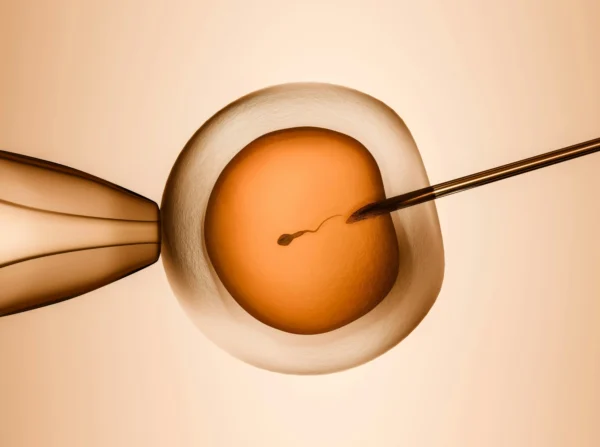
In standard IVF, the quality of the eggs is the primary constraint on success. Donor egg IVF removes that constraint by replacing the patient’s eggs with eggs from a prescreened donor with a healthy egg supply.
Because donors are typically in their mid-20s and have passed comprehensive medical, genetic, and psychological screening, the embryos produced from their eggs carry a lower rate of chromosomal abnormalities. The recipient’s age — the dominant predictor of success in own-egg IVF — becomes far less relevant. Success is now driven primarily by the lab’s embryology quality and the recipient’s uterine environment.
~53%
Average live birth rate per donor egg transfer cycle nationally (CDC ART data)
95%+
Post-thaw egg survival rate at experienced labs using vitrification
Recipient age
Becomes far less predictive of outcome — donor age drives success in donor egg IVF
~40K
Donor egg IVF cycles performed annually in the U.S. (SART national summary)
WHO IT’S FOR
Who benefits most from donor egg IVF?
Donor egg IVF is recommended for a broad range of patients. Women with advanced maternal age can bypass age-related egg quality decline — the primary reason own-egg IVF success drops sharply after 40. Patients with diminished ovarian reserve or premature ovarian insufficiency at any age often cannot produce viable embryos with their own eggs. Those carrying heritable genetic conditions can avoid passing them on while still carrying the pregnancy themselves.
Donor eggs are also central to family building for singles and gay couples pursuing surrogacy, and are frequently recommended for patients who have experienced repeated IVF failure where embryo quality was the limiting factor.
WHAT TO EVALUATE
Six criteria that define a strong donor egg program
Use these in roughly this order. The first three are non-negotiable. The rest separate programs that are merely competent from those that excel specifically at donor egg IVF.
1
Embryology lab quality and donor egg volume
Donor egg success is far more dependent on the embryology lab than on the physician who performs the transfer. The lab is where eggs are thawed, fertilized, cultured to blastocyst, and vitrified and the quality of that environment directly determines how many viable embryos you have to transfer.
Specifically for donor egg IVF, ask how many donor egg transfer cycles the lab completes per year. This number is separate from the clinic’s total IVF volume and tells you whether the team is regularly working with donor gametes. A lab doing fewer than 50 donor egg transfers annually may not have the experience depth of one doing 200 or more. Look for on-site CAP or Joint Commission accreditation, vitrification as the standard for all egg thawing, time-lapse incubation, and electronic witnessing.
Ask: “How many donor egg embryo transfer cycles did your lab perform last year?”
2
Donor screening standards — beyond FDA minimums
All U.S. egg donors must meet FDA-required infectious disease screening. But the best programs go considerably further. Psychological evaluation by a licensed mental health professional, comprehensive genetic carrier screening (ideally 300+ conditions beyond the FDA-required panel), detailed reproductive history including prior donation cycles and documented outcomes, and medical and genetic family history spanning at least two generations.
Ask specifically: does the clinic use its own donors, a partner agency, or a frozen egg bank? Each has implications for screening depth, selection timelines, and what outcome data is available.
Ask: “What genetic screening panel do you use for donors, and how many prior donation cycles has a typical donor completed?”
3
SART-reported donor egg live birth rates
SART publishes donor egg outcome data separately from own-egg IVF. Because donor eggs remove recipient age as a variable, donor egg live birth rates are a cleaner signal of a clinic’s embryology lab quality and transfer protocols than own-egg numbers.
Pull the SART Clinic Summary Report for any clinic you’re seriously considering and look specifically at the donor egg section. Check the number of donor egg transfers performed (volume signal), live birth rate per transfer, and singleton rate — a high singleton rate indicates the program is following elective single embryo transfer best practices rather than inflating rates through multiple embryo transfers.
Ask: “Can you share your donor egg live birth rate from your most recent SART report, and how does it compare to the national average?”
4
Donor pool diversity, size, and matching process
A clinic or program with a large, diverse, and actively maintained donor pool gives you meaningful choice. A small or static pool, especially one that relies entirely on frozen egg banks with limited profiles constrains your options. Look for diverse ethnic backgrounds, a matching process with a dedicated coordinator, detailed donor profiles including medical history and genetic testing results, and clear policies about how many times a donor’s eggs can be used.
Ask: “How large is your current active donor pool, and what is the typical timeline from matching to cycle start?”
5
Uterine preparation and recipient protocol expertise
Donor egg IVF is fundamentally different from own-egg IVF from the recipient’s perspective there is no stimulation or retrieval. The recipient’s preparation focuses entirely on the uterus: endometrial lining development, timing of the transfer, and identifying and treating any uterine factors that could affect implantation.
A high-quality program evaluates the uterine environment thoroughly before any transfer, uses ERA (Endometrial Receptivity Analysis) or similar testing when indicated, has clear protocols for patients with prior implantation failures or uterine abnormalities, and coordinates medication timing with the donor’s cycle precisely.
Ask: “What uterine evaluation do you do before a donor egg transfer, and how do you approach patients who have had prior implantation failures?”
6
Full-service coordination: legal, psychological, and financial
Donor egg IVF involves more parties and more complexity than own-egg IVF. A comprehensive program provides legal guidance on donor agreements and parental rights, psychological support for recipients navigating the emotional dimensions of donor conception, financial counseling including multi-cycle package options and insurance verification under California’s SB 729, and coordination with surrogacy services if the recipient cannot or chooses not to carry the pregnancy themselves.
Ask: “Do you have dedicated legal and psychological resources for donor egg patients, or do I coordinate those independently?”
UNDERSTANDING YOUR OPTIONS
Fresh donor eggs vs. frozen donor eggs vs. embryo donation
Patients pursuing donor egg IVF in California have three primary sourcing options. Each involves different tradeoffs on timing, cost, selection, and outcome data.
OPTION 1
Fresh donor eggs
- Donor & recipient cycles synchronized
- Larger egg cohort typically retrieved
- Longer matching/timeline (3–6 months)
- Higher upfront cost
- More selection flexibility
Best for: patients who want maximum egg cohort and can plan ahead
OPTION 2
Frozen donor eggs (egg bank)
- Immediately available — faster cycle start
- Fixed cohort (typically 6–8 eggs per lot)
- Lower upfront cost than fresh cycle
- Modern vitrification = 90%+ post-thaw survival
- Limited selection in some banks
Best for: patients who want faster timelines or budget flexibility
OPTION 3
Embryo donation
- Embryos donated by other IVF patients
- No genetic connection to either parent
- Lower cost than fresh or frozen egg cycles
- Limited matching options
- Requires full legal and ethical disclosure
Best for: patients for whom cost is primary and genetic connection is not a priority
CLINIC COMPARISON FRAMEWORK
Questions to ask any California donor egg clinic
Use this as your consultation checklist. Specific, numerical answers are a good sign. Vague reassurances are not.
| Criterion | What to ask | Why it matters |
|---|---|---|
| SART donor data | “What is your donor egg live birth rate per transfer in your most recent SART report?” | Cleanest available proxy for lab and transfer quality |
| Lab accreditation | “Is your lab CAP-accredited and on-site? Do you use vitrification?” | Foundation of egg survival and embryo development rates |
| Donor volume | “How many donor egg cycles did your program complete last year?” | Volume is a proxy for experience and team specialization |
| Donor screening | “What genetic panel do you run on donors, beyond FDA requirements?” | Broader screening = lower risk of heritable conditions |
| Donor pool | “How many active donors do you have, and what is the matching timeline?” | Larger, diverse pool = more choice, shorter wait times |
| Uterine prep | “What evaluation do you do of the recipient’s uterus before transfer?” | Identifies implantation factors before they cause cycle failure |
| Legal & psych support | “Do you have in-house legal and psychological resources for donor patients?” | Comprehensive support reduces friction and emotional burden |
| Singleton rate | “What is your singleton birth rate for donor egg transfers?” | High singleton rate = appropriate eSET practice, lower risk |
WHAT TO ASK AT YOUR CONSULTATION
Questions to bring to a donor egg consultation
- What is your clinic’s live birth rate specifically for donor egg frozen embryo transfers?
- Will my embryos be created in your lab, or sent elsewhere for any part of the process?
- What genetic screening does every donor complete before being added to your pool?
- How long is the typical timeline from matching with a donor to embryo transfer?
- Do you offer PGT-A on donor embryos, and do you recommend it for first-time recipients?
- What uterine evaluation will I have before transfer, and what would delay or change the protocol?
- What happens to unused embryos — can I freeze them for future cycles or siblings?
- What is the all-in cost, including medication, legal review, and first-year embryo storage?
- If this cycle doesn’t result in a pregnancy, what does the next step look like?
WARNING SIGNS
Red flags in donor egg IVF programs
- No SART donor egg outcome data available or refusal to share it
- Embryos created or eggs thawed at an off-site lab
- Donor screening limited to FDA-required minimums only
- No dedicated donor coordinator or matching support
- High multiple-birth rate suggesting routine multi-embryo transfers
- No psychological support offered or referenced for recipients
- Pressure to move quickly without adequate evaluation of the uterus
- Quoted success rates with no clarification of how they’re calculated
COMMON QUESTIONS
Frequently asked questions
It matters less than in own-egg IVF, but it’s not irrelevant. The embryo’s chromosomal health is tied to the donor’s age, not the recipient’s, which is why success rates for donor egg cycles remain relatively stable across recipient ages. However, the recipient’s uterine health, which can be affected by age and other medical factors, still matters for implantation. A thorough pre-transfer uterine evaluation is important regardless of the recipient’s age.
For most patients, modern vitrification has narrowed the outcome gap between fresh and frozen donor eggs to near-parity. Frozen donor eggs offer faster timelines and lower initial costs; fresh donor egg cycles typically produce a larger egg cohort and more flexibility for multiple transfer attempts from a single retrieval. Your physician should help you decide based on your timeline, budget, and how many embryos you want available.
California’s SB 729 (effective January 1, 2026) requires fully-insured large-group employer plans to cover IVF and medically necessary fertility treatments on plan renewal. Coverage for donor egg IVF specifically varies by plan language and whether the treatment is deemed medically necessary. Always have the clinic’s financial counselor verify your specific benefits before treatment.
No, in most cases, the recipient carries the pregnancy herself. Donor egg IVF is a standard procedure where the recipient’s uterus receives the embryo; no surrogate is involved unless the recipient has a medical condition that makes carrying a pregnancy unsafe, or unless you are a male individual or couple. Full-service clinics can coordinate surrogacy alongside donor egg IVF for patients who need both.
If you are the recipient carrying the pregnancy, the child will not share your genetics from the egg, but emerging research suggests that the uterine environment does influence fetal gene expression through epigenetic mechanisms. If your partner’s sperm is used, the child will share your partner’s genetics. A counselor experienced in donor conception can help you process and discuss these questions at any stage.
Pull the clinic’s SART Clinic Summary Report directly at sartcorsonline.com and look at the donor egg section. Verify that the number of transfers cited is consistent with what the clinic quotes, check whether the rate is reported per transfer or per cycle started, and confirm the singleton rate. If a clinic cites a success rate substantially higher than their SART-reported data, ask how they’re calculating it and what patient population it reflects.
Medical disclaimer: This article is for informational purposes only and does not constitute medical advice. Donor egg IVF outcomes depend on individual clinical factors. Consult a board-certified Reproductive Endocrinologist for personalized guidance. Success rate data referenced reflects national averages from CDC ART and SART national summaries; individual clinic outcomes vary.