How Do I Choose a Fertility Preservation Clinic in Southern California?
The region has dozens of clinics. Every one advertises “leading success rates.” This guide cuts through the noise — whether you’re freezing eggs for personal reasons, facing cancer treatment, or banking embryos for the future.
•
SCRC Editorial Team
•
8 min read
If you’re researching fertility preservation in Southern California, you’re probably overwhelmed within an hour of starting. The region has dozens of clinics, every one of them advertises “leading success rates,” and the marketing makes it almost impossible to tell who is genuinely excellent from who is simply well-funded. This guide cuts through that noise.
Whether you’re considering egg freezing for personal reasons, you’ve just been diagnosed with cancer and need to preserve fertility before treatment, or you’re part of a couple banking embryos for the future, the decision of where to go matters more than most patients realize.
THE SHORT ANSWER
To choose a fertility preservation clinic in Southern California, focus on five things, in this order:
- The clinic’s SART-reported success rates for egg and embryo freezing in your age group
- On-site embryology lab accreditation (CAP and CLIA)
- Physician experience specifically with oocyte cryopreservation — not just IVF
- Urgent oncofertility access if you’re facing cancer treatment
- Transparent pricing combined with proper insurance verification under California’s SB 729
Bedside manner, clinic location, and storage logistics matter — but they’re tiebreakers, not primary criteria.
WHO IT’S FOR
What is fertility preservation, and who is it for?
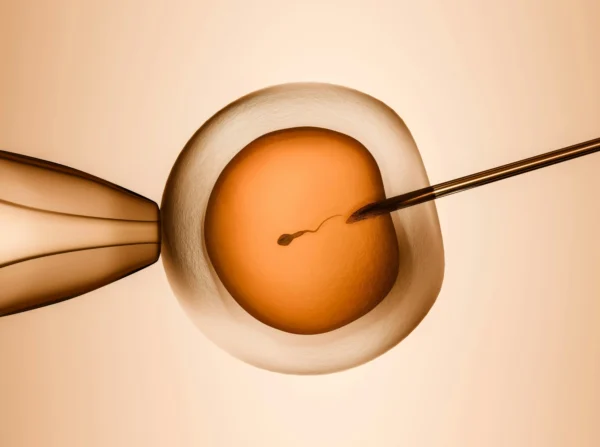
Fertility preservation is the freezing and storage of eggs, sperm, embryos, or in some cases ovarian tissue, so they can be used to attempt pregnancy later. Modern vitrification — flash-freezing — has replaced older slow-freeze methods and produces post-thaw survival rates above 90% at experienced labs. But the lab’s skill matters more than the technology label. The clinic you choose drives outcomes.
The three main patient groups are: elective patients who want to delay parenthood for personal, professional, or relationship reasons (oocyte cryopreservation is the standard option); medical patients facing cancer treatment, autoimmune therapy, gender-affirming care, or surgery that may compromise fertility; and couples banking embryos during an IVF cycle for future siblings or as a hedge against secondary infertility.
HOW TO CHOOSE
Seven criteria for choosing a fertility preservation clinic
Use these in roughly this order. The first three are non-negotiable. The rest help you choose between clinics that pass the first filter.
1
Look at SART success rates for your specific age group
The Society for Assisted Reproductive Technology (SART) publishes clinic-specific outcome data every year. For fertility preservation, the most predictive numbers are eggs retrieved per cycle, mature eggs frozen per retrieval, post-thaw survival rate, and — when available — live birth rate per egg thawed.
Ignore generic “success rate” claims on homepages. Pull the SART report for any clinic you’re seriously considering, and compare your age group specifically. A 35-year-old’s expected egg yield is very different from a 41-year-old’s, and clinic-wide averages don’t tell you what to expect from your own cycle.
2
Confirm the embryology lab is on-site and accredited
The lab is where eggs survive or don’t. When you tour or interview clinics, ask: Is the lab CAP- or CLIA-accredited? Is the lab on-site, or are eggs shipped to a partner facility for freezing? Who is the lab director, and what are their credentials? Does the lab use vitrification (not slow-freeze) and time-lapse imaging? What quality controls are in place — witness systems, electronic chain-of-custody, dual incubator backups?
Walk away from: any clinic that won’t tell you who runs the lab or where eggs are frozen.
3
Vet your physician’s training and case volume
You want a board-certified Reproductive Endocrinologist, not a general OB/GYN with a fertility interest. Ask whether the physician is double board-certified in OB/GYN and Reproductive Endocrinology and Infertility (REI), how many egg-freezing cycles they’ve personally supervised in the last twelve months, what their protocol is for patients with low AMH or diminished ovarian reserve, and — for oncofertility — whether they can start stimulation within a week of referral.
Volume correlates with outcomes. A physician doing 200 egg-freezing cycles a year has seen problem cases that a physician doing 20 has not.
4
Confirm urgent oncofertility access
If you’ve just been diagnosed with cancer, the window between diagnosis and the start of treatment is typically two to four weeks.” A qualified clinic should schedule a consultation within 24–72 hours of an oncology referral, coordinate directly with your cancer care team, use random-start or duo-stim protocols when timing doesn’t allow a conventional start, and offer egg, embryo, and sperm freezing on-site.
The benchmark is 24–72 hours. Anything slower delays cancer treatment — which is unacceptable.
5
Demand itemized, transparent pricing
A complete egg-freezing cycle in Southern California typically costs $10,000–$17,000 before medications, plus $3,000–$7,000 in fertility medications, plus annual storage fees of roughly $500–$1,000. Embryo freezing as part of an IVF cycle adds $1,500–$3,000 to a standard IVF quote.
Ask for a written, itemized estimate breaking out monitoring (ultrasounds and bloodwork), egg retrieval and anesthesia, lab fees including vitrification and first-year storage, medications and pharmacy discount programs, and any genetic testing add-ons. Be skeptical of “all-inclusive” prices that don’t disclose what’s excluded.
6
Make sure the clinic understands SB 729
California Senate Bill 729, effective January 1, 2026, requires fully-insured large-group employer health plans (100+ employees) to cover infertility diagnosis and treatment, including IVF and medically necessary fertility preservation — such as egg freezing before chemotherapy. Coverage applies on plan renewal after January 1, 2026.
Key caveats: SB 729 does not apply to self-funded plans, small-group plans, individual market plans, or Medi-Cal. Elective egg freezing may or may not be covered depending on plan language. CalPERS plans aren’t required to comply until July 1, 2027.
A good clinic has a financial counselor who runs a benefits check before your consultation, not after.
7
Choose a full-service clinic if you may need more later
The best fertility preservation clinics treat preservation as part of a longer arc, not a one-time transaction. That means LGBTQ+ affirming care and reciprocal IVF capability, in-house third-party reproduction (donor eggs, donor sperm, gestational carriers), mental health and integrative care referrals, on-staff genetic counseling, and a patient portal with direct physician messaging.
If you may eventually need a donor, surrogate, or genetic testing, choosing a full-service center now saves you from re-establishing care at a new clinic later.
CLINIC EVALUATION GUIDE
Questions to ask any clinic you’re comparing
Always verify directly with each clinic — programs and pricing change. The answers, and how comfortable the team is answering them, will tell you more than any marketing material.
| Criterion | What to ask | Why it matters |
|---|---|---|
| SART membership | “Are you a SART member clinic?” | Required for transparent outcome reporting |
| Lab accreditation | “Is your lab CAP- and CLIA-accredited, and on-site?” | Predicts egg survival and live-birth rates |
| Vitrification | “Do you use vitrification for all egg freezing?” | Standard of care; slow-freeze is outdated |
| Oncofertility timeline | “How fast can you start a cycle for a cancer patient?” | 24–72 hours is the benchmark |
| Physician volume | “How many egg-freezing retrievals does my doctor do per year?” | Volume correlates with outcomes |
| Itemized pricing | “Can I get a written cost estimate before I commit?” | Prevents surprise bills |
| SB 729 navigation | “Will you verify my insurance benefits before I commit?” | Coverage varies significantly by employer plan |
| Inclusive care | “Do you have specific protocols for LGBTQ+ patients and single parents?” | Reflects clinic culture and competence |
QUESTIONS TO BRING
What to ask at a fertility preservation consultation
- What is your clinic’s egg survival rate after thaw, and how is that calculated?
- Based on my AMH, antral follicle count, and age, how many eggs would you recommend I freeze, and across how many cycles?
- What stimulation protocol would you use for me, and why?
- Where will my eggs be stored, and what happens to them if the clinic changes ownership?
- What is the all-in cost, including medications and one year of storage?
- If I need IVF later, do you transfer storage seamlessly, or are there fees?
- What is your policy on disposing of, donating, or moving stored eggs and embryos?
- Who is my point of contact between visits — the doctor, a nurse, or a coordinator?
TIMELINE
How long does fertility preservation take?
For a typical elective egg-freezing patient, the timeline runs four to six weeks from first consultation to frozen eggs. For oncofertility patients, experienced clinics can compress this to two or three weeks using random-start protocols. If a clinic tells you it will take three months to get started, that’s a workflow problem — not a medical one.
Week 1-2
Initial consultation and testing — AMH blood draw, antral follicle count via ultrasound, infectious disease panel. Forms the basis of your personalized stimulation protocol.
Day 1–14
Ovarian stimulation — 10–14 days of self-administered hormone injections, with monitoring ultrasounds and bloodwork every 2–3 days to track follicle growth
Day 14–15
Egg retrieval — Outpatient procedure under light sedation, approximately 20 minutes. No incisions; eggs are retrieved transvaginally under ultrasound guidance
Day 14–15
Vitrification — Mature eggs are flash-frozen in the lab the same day as retrieval and placed into secure cryogenic storage.
Day 15–17
Recovery — Most patients return to normal activity within 1–2 days. Light cramping and bloating are common and temporary.
WARNING SIGNS
Red flags to watch for
Reputable clinics will let you take the information home, compare options, and come back. Pressure to commit during a first consultation is itself a reason not to commit.
- What is your clinic’s egg survival rate after thaw, and how is that calculated?
- Based on my AMH, antral follicle count, and age, how many eggs would you recommend I freeze, and across how many cycles?
- What stimulation protocol would you use for me, and why?
- Where will my eggs be stored, and what happens to them if the clinic changes ownership?
- What is the all-in cost, including medications and one year of storage?
- If I need IVF later, do you transfer storage seamlessly, or are there fees?
- What is your policy on disposing of, donating, or moving stored eggs and embryos?
- Who is my point of contact between visits — the doctor, a nurse, or a coordinator?
COMMON QUESTIONS
Frequently asked questions
Medically necessary fertility preservation — such as egg freezing before chemotherapy — is covered under SB 729 for fully-insured large-group plans renewed on or after January 1, 2026. Elective egg freezing is generally not mandated, but some employer benefit programs (Progyny, Carrot, Maven, Stork Club) do cover it. Always verify with your HR department before assuming coverage.
This depends on your age and ovarian reserve. As a rough guide, fertility specialists often target 15–20 mature eggs for women under 35, and 20–30 for women aged 35–37, to give a reasonable chance of one live birth. Your physician should give you a personalized target based on your AMH and antral follicle count — not a one-size-fits-all number.
Egg quality declines with age, so earlier is generally better. The most cost-effective window is typically the late 20s to early 30s. Egg freezing in the late 30s and early 40s is still possible and often valuable, but it typically requires more cycles to bank a comparable number of mature eggs.
There is no firm biological time limit. Pregnancies have been reported from eggs stored more than a decade and from embryos stored more than 25 years. Most clinics charge an annual storage fee, typically $500–$1,000, which should be disclosed up front in any cost estimate.
Eggs preserve maximum flexibility — you don’t commit to a partner or sperm donor. Embryos historically had slightly higher post-thaw survival rates, but modern vitrification has narrowed that gap to near-parity. If you don’t have a partner or chosen donor, freezing eggs is the standard recommendation.
You decide. Standard options are continued storage, donation to research, donation to another patient, or respectful discarding. Your clinic should walk you through these choices in writing at the time of freezing — not years later when the decision becomes emotionally charged.
Geography matters less than the specific clinic and physician. Some of the highest-volume, most experienced fertility preservation programs in California are concentrated in Beverly Hills and West Los Angeles, but excellent programs exist across the region. Compare on the seven criteria above, not ZIP code.