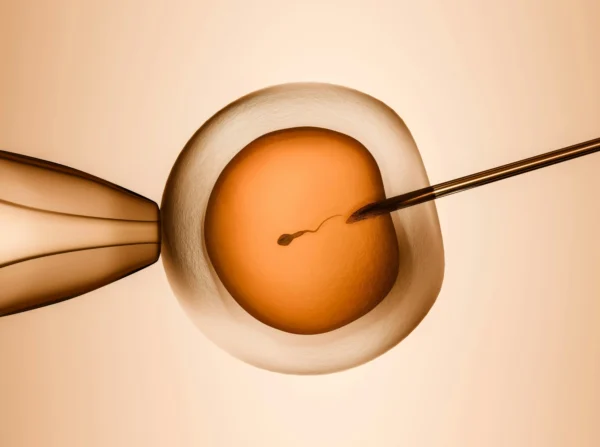
Is Genetic Testing on Embryos Worth It Before My IVF Transfer?
PGT can tell you a lot about an embryo before transfer, but not everything, and the evidence behind it is more debated than most patients are told. Here’s what each type of testing actually shows, and when it’s genuinely worth it.
•
SCRC Editorial Team
•
8 min read
By the time your embryos are ready for transfer, someone has probably already asked whether you want them genetically tested first, sometimes with very little time to think it over. It’s a bigger decision than the way it’s often presented, and the honest answer depends on specifics: your age, your history, how many embryos you have, and what the evidence actually supports for someone in your situation.
It also depends on being clear about what the evidence says, which isn’t always how this gets explained. Preimplantation genetic testing, PGT, is a well-established lab procedure. Whether it changes your odds of a successful pregnancy is a more debated question than the marketing around it usually suggests. Here’s what each type of testing actually checks, what the most recent guidance from ASRM says about its benefit, and how to decide if it’s worth it for you.
THE SHORT ANSWER
There are three established types of embryo genetic testing. PGT-A checks for the correct number of chromosomes. PGT-M checks for a specific single-gene condition when a parent is a known carrier. PGT-SR checks for a parental chromosomal translocation. PGT-M and PGT-SR have a clear, specific medical indication when they apply. PGT-A is more common but more debated: ASRM’s most recent committee opinion found no proven benefit to cumulative live birth rate or miscarriage rate from routine PGT-A, even in older patients or donor egg cycles, though it does support transferring one embryo at a time with success similar to transferring two untested embryos, without the higher risk of twins. A newer test, PGT-P, which estimates risk for common diseases, was found by ASRM in December 2025 to not be ready for clinical use.
WHY IT MATTERS
Why “is it worth it” doesn’t have one answer
PGT doesn’t change the embryo. It only changes what you know about it before you transfer it. That distinction matters, because it means the value of testing depends entirely on whether that information would actually change your decision, and for a long time, patients were told it would change more than the evidence supports.
For years, PGT-A was described as something that reduces miscarriage risk and improves the odds a transfer works, especially with age. The evidence hasn’t consistently backed that up. ASRM’s most recent committee opinion, reviewing multiple randomized controlled trials, concluded that testing embryos with PGT-A hasn’t been shown to reliably improve cumulative live birth rates or reduce miscarriage rates compared with transferring untested embryos, a conclusion that held even in cycles using donor eggs and in older patients with a good ovarian response.
What the evidence does support is more specific. PGT-A allows you to transfer a single embryo at a time with a live birth rate similar to transferring two untested embryos, without the substantially higher risk of twins that comes with a double transfer. If you have several embryos, it also helps prioritize which one to try first, which matters more the fewer embryos you have. For patients with a history of recurrent pregnancy loss specifically, some data suggest PGT-A may increase the live birth rate per transfer, though the evidence there is still considered lower quality and worth discussing individually rather than assuming it applies to everyone.
WHAT TO UNDERSTAND FIRST
Six things to understand before deciding
Work through these before saying yes or no. Most of the actual decision lives in items two and three.
1
Understand what PGT-A actually checks
PGT-A screens for the correct number of chromosomes. It doesn’t test for single-gene diseases, structural birth defects unrelated to chromosome count, or the many non-genetic factors that affect a pregnancy. A euploid result lowers the chance that chromosome number is the reason a transfer wouldn’t work; it isn’t a guarantee of a healthy baby.
Ask: “Beyond chromosome number, what does PGT-A not tell us, and how should that shape how much weight we put on the result?”
2
Know what the evidence actually shows before assuming it helps
ASRM’s own 2024 committee opinion found that routine PGT-A hasn’t been shown to improve cumulative live birth rates or reduce miscarriage in the general IVF population, a conclusion that held even for donor egg cycles and didn’t support routine use for advanced paternal age alone. That’s a different message than a lot of patients hear when testing is first offered.
Ask: “What does your own clinic’s data show for outcomes with and without PGT-A for someone in my specific situation?”
3
Understand where testing does have a clearer role
The best-supported use of PGT-A is enabling a single-embryo-transfer strategy: transferring one tested embryo gets a similar live birth rate to transferring two untested embryos, without the much higher twin rate that comes with a double transfer. It also helps you decide which embryo to prioritize first when you have more than one, which becomes more useful the smaller your embryo count.
Ask: “If I have multiple embryos, would testing meaningfully change which one you’d recommend transferring first?”
4
Consider PGT-M or PGT-SR separately if a specific risk applies to you
If you or your partner is a known carrier of a single-gene condition, PGT-M is a different tool built to test for that specific mutation, and it typically requires genetic counseling and a custom probe before your cycle. If either of you carries a chromosomal translocation, often uncovered during a recurrent pregnancy loss workup, PGT-SR checks for that specifically. Neither of these is optional in the way PGT-A’s broader benefit is debated; they’re targeted tools for a known, specific risk.
Ask: “Does either of us have a personal or family history that would make PGT-M or PGT-SR relevant, separate from the PGT-A conversation?”
5
Understand mosaic results and the logistics involved
A meaningful share of PGT-A results come back mosaic, a mix of normal and abnormal cells in the sample, rather than a clean euploid or aneuploid call. Mosaic embryos aren’t automatically discarded and are increasingly transferred with genetic counseling, sometimes resulting in healthy pregnancies. Testing also requires biopsying the embryo and freezing it while results come back, which typically takes one to two weeks and pushes your transfer to a later frozen cycle either way.
Ask: “What percentage of your patients’ results come back mosaic or with no usable result, and how do you counsel through that?”
6
Be skeptical of newer, unvalidated add-ons
PGT-P, which estimates an embryo’s risk for common conditions like diabetes or heart disease using a polygenic scoring model, is a separate and much newer technology. In December 2025, ASRM’s Ethics and Practice Committees concluded that PGT-P is not ready for clinical use, citing predictive uncertainty and significant ethical concerns, and stated that it should not currently be offered as a reproductive service.
Ask: “If a newer add-on test like PGT-P is offered, what does current ASRM guidance actually say about its validity?”
TYPES OF TESTING
The three established types of PGT, and one that isn’t
A quick reference for what each type actually checks and who it applies to.
| Type | What it checks | Who it’s for |
|---|---|---|
| PGT-A | The correct number of chromosomes (aneuploidy) | Patients pursuing single-embryo transfer or prioritizing among several embryos; broad live-birth benefit is not established |
PGT-M | A specific single-gene condition (e.g., cystic fibrosis) | Known carriers of, or individuals affected by, an inherited single-gene disorder |
| PGT-SR | Balanced or unbalanced chromosomal rearrangements | Parents who carry a known chromosomal translocation or inversion |
| PGT-P | Estimated risk scores for common diseases like diabetes | Not currently recommended by ASRM (Dec. 2025) |
HOW TESTING ACTUALLY WORKS
What the biopsy and results process actually involves
Regardless of which type applies to you, the mechanics are the same.
- Trophectoderm biopsy: A few cells are removed from the outer layer of a day 5 to 7 blastocyst, the part that becomes the placenta, not the inner cell mass that becomes the baby.
- A freeze-all cycle: Because results take days to return, tested embryos are almost always frozen after biopsy and transferred in a later cycle rather than fresh.
- Mosaic results: A meaningful share of results return mosaic, a mix of normal and abnormal cells, and these aren’t automatically discarded with proper genetic counseling.
- No-result embryos: A small percentage of biopsies don’t yield a usable result and may need re-biopsy or be transferred untested, depending on your plan.
- Turnaround time: Most PGT-A results return within one to two weeks, which is factored into your overall treatment timeline either way.
QUESTIONS TO ASK
Questions to bring to your consultation
These get past the marketing and into what testing would actually change for you.
- Based on the current evidence, is PGT-A likely to change my live birth odds, or mainly support single-embryo transfer?
- What does your clinic’s own outcome data show for patients in my specific situation, tested versus untested?
- If I have multiple embryos, would testing change which one you’d recommend transferring first?
- Does either of us have a personal or family history that would make PGT-M or PGT-SR relevant?
- What’s your lab’s mosaic result rate and no-result rate?
- How much does testing add to my cost and timeline, given I’ll likely need a frozen transfer regardless?
- If a newer test like PGT-P is offered, what does current professional guidance say about it?
WORTH PAUSING ON
Situations worth pausing on before you decide
None of these mean testing is the wrong call. They’re reasons to ask another question before you sign off.
- You’re told PGT-A will clearly improve your odds of a live birth, with no mention of what the current evidence actually shows
- You’re offered PGT-P and told it can meaningfully predict your future child’s health or traits
- You have very few embryos, and the possibility of biopsy risk or a no-result outcome hasn’t been discussed
- You carry a known single-gene condition or translocation and are offered only PGT-A, without PGT-M or PGT-SR discussed
- A mosaic result is presented as an automatic reason to discard the embryo without a genetic counseling conversation
- Cost and delay aren’t discussed upfront, and you feel pressured to decide the same day
- Non-medical sex selection is presented without any discussion of your clinic’s specific policy on it
COMMON QUESTIONS
Frequently asked questions
No. PGT-A only screens for the correct number of chromosomes. It doesn’t test for single-gene diseases, structural issues unrelated to chromosome count, or the many non-genetic factors that affect a pregnancy. A normal result lowers one specific risk; it isn’t a guarantee.
For most patients, the evidence doesn’t clearly show that it does. ASRM’s most recent committee opinion, based on multiple randomized trials, concluded that routine PGT-A hasn’t been shown to improve cumulative live birth rates or reduce miscarriage compared with transferring untested embryos, a finding that held even in donor egg cycles. Where it has a clearer role is supporting single-embryo transfer with outcomes similar to transferring two untested embryos, without the higher twin risk. Ask your own clinic what their data shows for someone in your situation.
A mosaic result means the biopsied cells showed a mix of normal and abnormal chromosome patterns, rather than a clean euploid or aneuploid call. This doesn’t automatically mean the embryo should be discarded. With genetic counseling, some mosaic embryos are transferred and result in healthy pregnancies, though outcomes vary by the specific type and level of mosaicism found.
PGT-A screens for the correct number of chromosomes and can apply to any embryo. PGT-M looks for one specific, known single-gene mutation, such as the gene for cystic fibrosis, and only applies when a parent is a known carrier or affected by that specific condition. They test for fundamentally different things and are often used together when both are relevant.
PGT-A incidentally reveals chromosomal sex, and using that for family balancing is legal in the U.S., though policies vary by clinic. Predicting complex traits like disease risk from an embryo biopsy is a separate technology called PGT-P, and ASRM’s Ethics and Practice Committees concluded in December 2025 that it isn’t ready for clinical use given its current predictive limitations, stating that non-medical trait selection falls outside the scope of reproductive medicine altogether.
Trophectoderm biopsy is generally considered safe when performed by experienced embryologists, removing a small number of cells from the layer that becomes the placenta rather than the inner cell mass that becomes the fetus. There’s a small but real risk of embryo damage or a no-result outcome, which is one more reason lab experience and volume matter here just as much as they do for fertilization and freezing.
HOW SCRC APPROACHES EMBRYO GENETIC TESTING
Recommendations based on evidence, not a blanket policy
We don’t default every patient into PGT-A. Our physicians walk through what the current evidence actually supports for your specific situation, whether that’s a single-embryo-transfer strategy, a defined genetic risk, or a plan that doesn’t include testing at all, before recommending a path forward.
- Individualized recommendations — we walk through your age, history, and embryo count, and what current ASRM guidance actually supports, before recommending PGT-A.
- In-house biopsy — performed by experienced embryologists, with reference-lab partnerships for the genetic analysis itself.
- Genetic counseling access — for PGT-M, PGT-SR, or a mosaic result, we connect you with a genetic counselor before you decide.
- Transparent lab metrics — ask us directly about our mosaic result rate and no-result rate.
- No pressure toward unvalidated add-ons — we follow ASRM’s current guidance rather than offering technology like PGT-P that hasn’t been shown to be clinically valid.