Is a Frozen Embryo Transfer Better Than a Fresh Transfer in IVF?
Frozen transfers have become a routine part of IVF, but whether they are the better choice depends on your situation. Here is what the research shows, the trade-offs of each approach, and how doctors decide.
•
SCRC Editorial Team
•
6 min read
If you are going through IVF, you may hear your doctor talk about a fresh transfer, a frozen transfer, or a “freeze-all” cycle. It is natural to want to know which one gives you the better chance of a healthy pregnancy.
Fresh and frozen are not alternatives to IVF. There are two ways to handle the final step of IVF, the embryo transfer. Both are well established, and neither is the right answer for every patient. This guide explains how each approach works, what large studies have found, and the factors that usually shape the decision.
THE SHORT ANSWER
For many IVF patients, research suggests that frozen and fresh embryo transfers lead to similar overall chances of a live birth. Frozen transfer can offer advantages for certain patients, including those at risk of ovarian hyperstimulation syndrome (OHSS), some people with PCOS, and anyone planning genetic testing of embryos. Fresh transfer can shorten the time to pregnancy and involve fewer steps. Each approach carries somewhat different pregnancy risks, so the better choice depends on how you responded to stimulation, your diagnosis, and your treatment goals.
THE BASICS
How fresh and frozen transfers differ
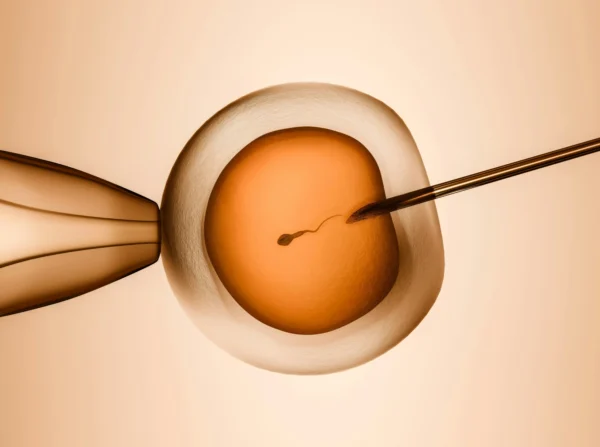
In a fresh transfer, an embryo is placed in the uterus a few days after egg retrieval, usually on day 3 or day 5 of embryo development, in the same cycle as ovarian stimulation. Any remaining good-quality embryos can be frozen for later use.
In a frozen transfer, embryos are vitrified (flash frozen) after they develop, then thawed and transferred in a later cycle. The uterine lining is prepared either with hormone medications or by timing the transfer around your own ovulation. When a clinic recommends freezing every embryo and skipping the fresh transfer entirely, this is often called a freeze-all approach.
Improvements in vitrification have made frozen transfers far more common over the past decade, and they now account for a large share of IVF transfers in the United States.
WHAT THE RESEARCH SHOWS
What large studies have found
A 2021 Cochrane review pooled randomized trials comparing a freeze-all strategy with a conventional strategy that includes a fresh transfer. It found little or no difference in cumulative live birth rates between the two approaches, a likely lower risk of OHSS with freeze-all, and a shorter time to pregnancy with fresh transfer, since a freeze-all cycle delays the transfer.
Some trials and analyses suggest frozen transfer may offer a higher live birth rate for specific groups, such as people with PCOS or those who produce a large number of eggs. For patients with a typical response to stimulation, studies generally have not shown a clear advantage either way.
HOW DOCTORS DECIDE
Five factors that shape the choice
Your doctor will usually weigh several of these together rather than relying on a single rule.
1
How your ovaries responded to stimulation
A strong response with many eggs and high estrogen levels raises the risk of OHSS, which can worsen if pregnancy begins in the same cycle. Freezing all embryos and transferring later allows hormone levels to settle first, which is one of the most common reasons doctors recommend a frozen transfer.
Ask: “Based on my response to stimulation, is my OHSS risk high enough to favor a frozen transfer?”
2
Whether you plan genetic testing
Preimplantation genetic testing (PGT) requires a small biopsy from each embryo and time for results to come back. Embryos are typically frozen while testing is completed, so planning PGT usually means a frozen transfer.
Ask: “If we test our embryos, how long do results take, and when could a transfer happen?”
3
Your hormone levels near egg retrieval
Some research suggests that a rise in progesterone late in stimulation can affect how ready the uterine lining is for implantation in that cycle. When levels are elevated, some doctors prefer to freeze embryos and transfer in a later, more controlled cycle.
Ask: “Will my hormone levels near retrieval affect whether a fresh transfer makes sense?”
4
Your diagnosis and uterine lining
Conditions such as PCOS, or a uterine lining that does not develop as expected during stimulation, may lead your doctor to recommend a frozen transfer. In other cases, a fresh transfer may be a reasonable first step.
Ask: “Does anything about my diagnosis or lining point toward one approach?”
5
Timing, cost, and logistics
A fresh transfer can lead to a pregnancy sooner and may involve fewer appointments and medications. A frozen transfer adds a separate preparation cycle and costs for freezing, storage, and thawing, but it can offer more flexibility around work, travel, or other plans.
Ask: “What additional costs and appointments would a frozen transfer add for me?”
SIDE BY SIDE
How fresh and frozen transfers compare
These are general patterns from published research. Your own situation may differ.
| Factor | Fresh transfer | Frozen transfer |
|---|---|---|
| Timing | A few days after retrieval, same cycle | A later cycle, after the lining is prepared |
| Overall live birth chances | Similar for many patients | Similar for many patients; may be higher for some groups |
| OHSS risk | Higher for strong responders | Lower, since pregnancy does not start in the stimulation cycle |
| Genetic testing | Not usually compatible with PGT | Allows time for PGT results |
| Pregnancy risks | Linked to smaller babies and preterm birth in some studies | Linked to higher preeclampsia risk in some studies |
| Added costs | Fewer steps | Freezing, storage, thaw, and a preparation cycle |
Ask: If your clinic recommends one approach for every patient, ask how they decide when the other approach might be a better fit.
PREGNANCY HEALTH
What to know about pregnancy risks
Both approaches lead to healthy pregnancies for most patients, but research has found some differences. Babies from fresh transfers have been linked in some studies to lower birth weight and preterm birth. Pregnancies from frozen transfers have been linked to a higher risk of preeclampsia and babies who are larger for their gestational age.
Researchers are studying whether the way a frozen transfer cycle is prepared plays a role. In programmed cycles, hormone medications prepare the lining and no ovulation occurs. Some studies suggest the higher preeclampsia risk may be linked to the absence of a corpus luteum, the structure that forms after ovulation, in these cycles. Randomized trials are underway to clarify this.
Frozen transfer cycles are usually prepared in one of three ways.
- Natural cycle. The transfer is timed around your own ovulation, with little or no medication.
- Modified natural cycle. Your own ovulation is used, with a trigger shot for timing and sometimes progesterone support.
- Programmed cycle. Estrogen and progesterone prepare the lining, which allows precise scheduling but does not involve ovulation.
QUESTIONS TO ASK YOUR DOCTOR
Questions to bring to your IVF consultation
Clear, specific answers can help you understand why a particular plan is being recommended for you.
- Do you recommend a fresh or frozen transfer for me, and why?
- How does my response to stimulation affect that recommendation?
- If we plan genetic testing, how does that change the timeline?
- What type of frozen transfer cycle would you use, natural or programmed?
- What are the costs for freezing, storage, thawing, and transfer preparation?
- How do your results compare by transfer type for patients like me?
- Are there pregnancy risks I should discuss with my OB if I choose a frozen transfer?
WARNING SIGNS
Red flags when comparing transfer advice
Any of these is a reason to ask more questions or seek a second opinion.
- A single policy applied to every patient without an explanation
- Claims that one transfer type guarantees a higher chance of success
- No discussion of OHSS risk after a strong response to stimulation
- Success rates quoted without context about age, embryo stage, or testing
- No clear breakdown of freezing, storage, and thaw fees
COMMON QUESTIONS
Frequently asked questions
Modern vitrification freezes embryos so quickly that ice crystals do not form, and research generally shows high survival rates after thawing for good-quality embryos. Your embryology lab can share how its embryos typically perform after thawing.
Many patients have a frozen transfer in the next cycle or the one after, once the ovaries have recovered. If genetic testing is planned, timing also depends on when results come back.
Yes. This is the conventional approach. If the fresh transfer does not lead to a pregnancy, frozen embryos can be used in later cycles without another egg retrieval.
Usually there are added costs for freezing, storage, thawing, and medications or monitoring for the preparation cycle. Some of these costs may be covered depending on your insurance, so ask your clinic for an itemized estimate.
Research on children born after frozen transfer is generally reassuring. Studies have found some differences in birth weight between fresh and frozen transfers, which your doctor can discuss in the context of your health.
The answer depends on your response to stimulation, your diagnosis, whether you plan genetic testing, and your timeline. A reproductive endocrinologist can review these factors with you and explain the reasoning behind a recommendation.
HOW SCRC APPROACHES EMBRYO TRANSFER PLANNING
SOUTHERN CALIFORNIA REPRODUCTIVE CENTER
Transfer plans built around your cycle and your goals
SCRC’s physicians review each patient’s response to stimulation, diagnosis, and testing plans to recommend a transfer approach, supported by an on-site embryology laboratory that handles embryo culture, freezing, and genetic testing.
- On-site embryology laboratory. SCRC’s Beverly Hills lab performs fertilization, embryo culture, vitrification, and preimplantation genetic testing under its senior embryology team.
- Embryo cryopreservation. Embryos can be frozen for future transfer, whether as part of a freeze-all plan or after a fresh transfer.
- Preimplantation genetic testing. PGT-A and PGT-M are available for patients who choose to test embryos before transfer.
- A range of IVF approaches. SCRC offers conventional IVF as well as minimal stimulation IVF.
- Physician expertise. Our physicians specialize in advanced IVF protocols and egg and embryo freezing.
Disclaimer: This article is for informational purposes only and does not constitute medical advice. Research findings describe outcomes across groups of patients and may not reflect your individual chances. Success rates vary by age, diagnosis, embryo quality, and other factors. Consult a board-certified Reproductive Endocrinologist for personalized guidance about your treatment.